FAWN darner
This is a female Fawn Darner, laying her eggs on a logjam. Females oviposit on woody debris and branches along streams. Both this female and the male above were photographed at Twin Creek near Germantown.
Fawn Darners fly along shaded streams and creeks, from June through October. Males hunt for females in exposed tree roots and overhanging branches along the riverbanks. They are probably more common than our records indicate. Fawn Darners can be difficult to document for several reasons: they stick to shadier habitat than most dragonflies, they tend to fly late in the afternoon and evening, and their grayish-brown color makes them difficult to see, both on the water and when they are perched in tree branches.
I found this Fawn Darner on June 23, 2018 in Beavercreek. I was watching a male Fawn Darner fly slowly along the tree line, nosing into every dark cubby-hole he could find. I couldn't figure out what he was doing. I thought he was looking for a place to perch and being unusually picky about it. I finally realized that he was looking for a female, when he suddenly found one. They formed a mating wheel briefly, and then I was able to photograph this individual later, after the pair separated.
Fawn Darners can be very difficult to find perched. They are nearly invisible among tree branches, unless you happen to see one land, and they seem to prefer very shaded roosting spots.
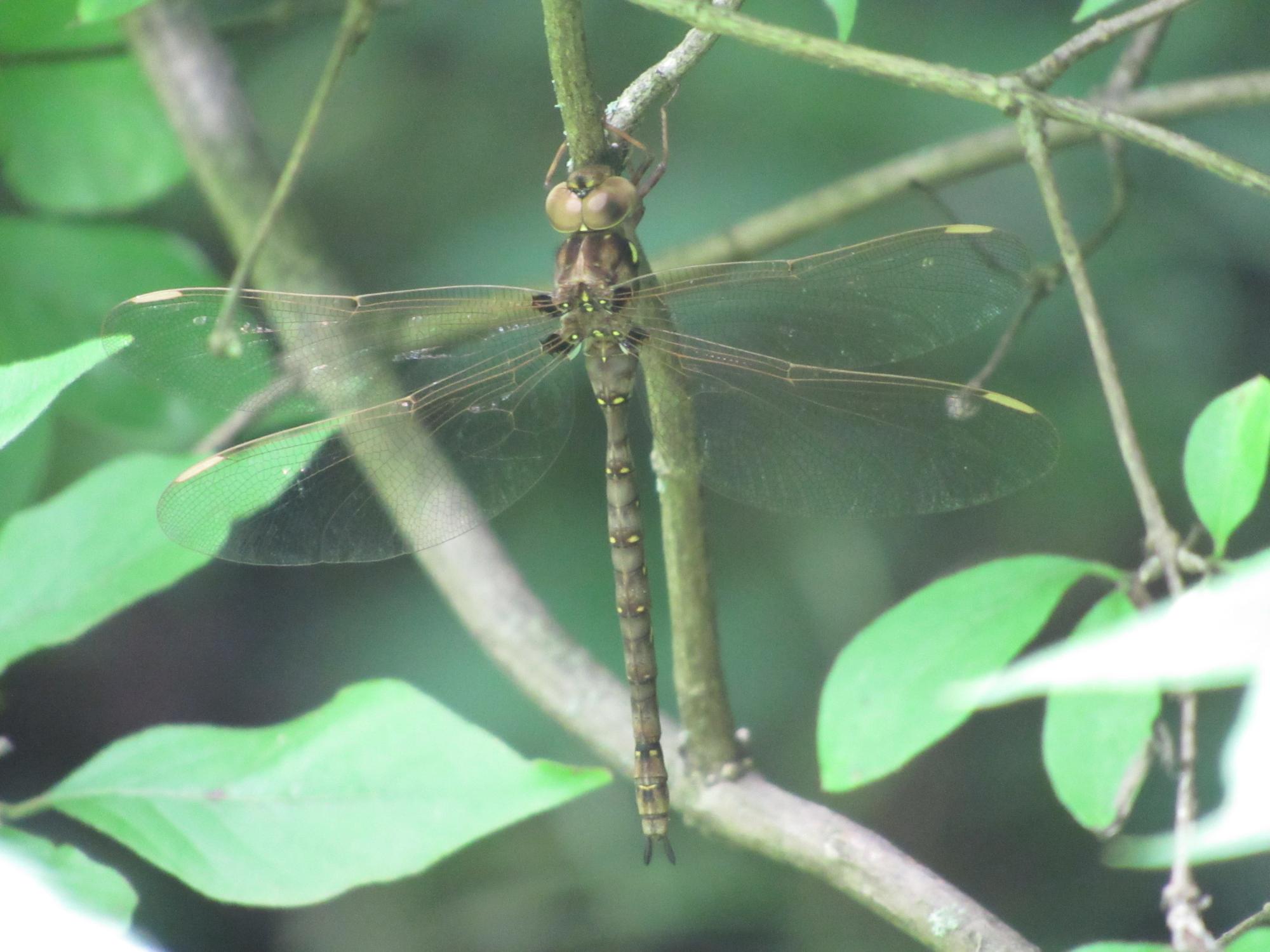
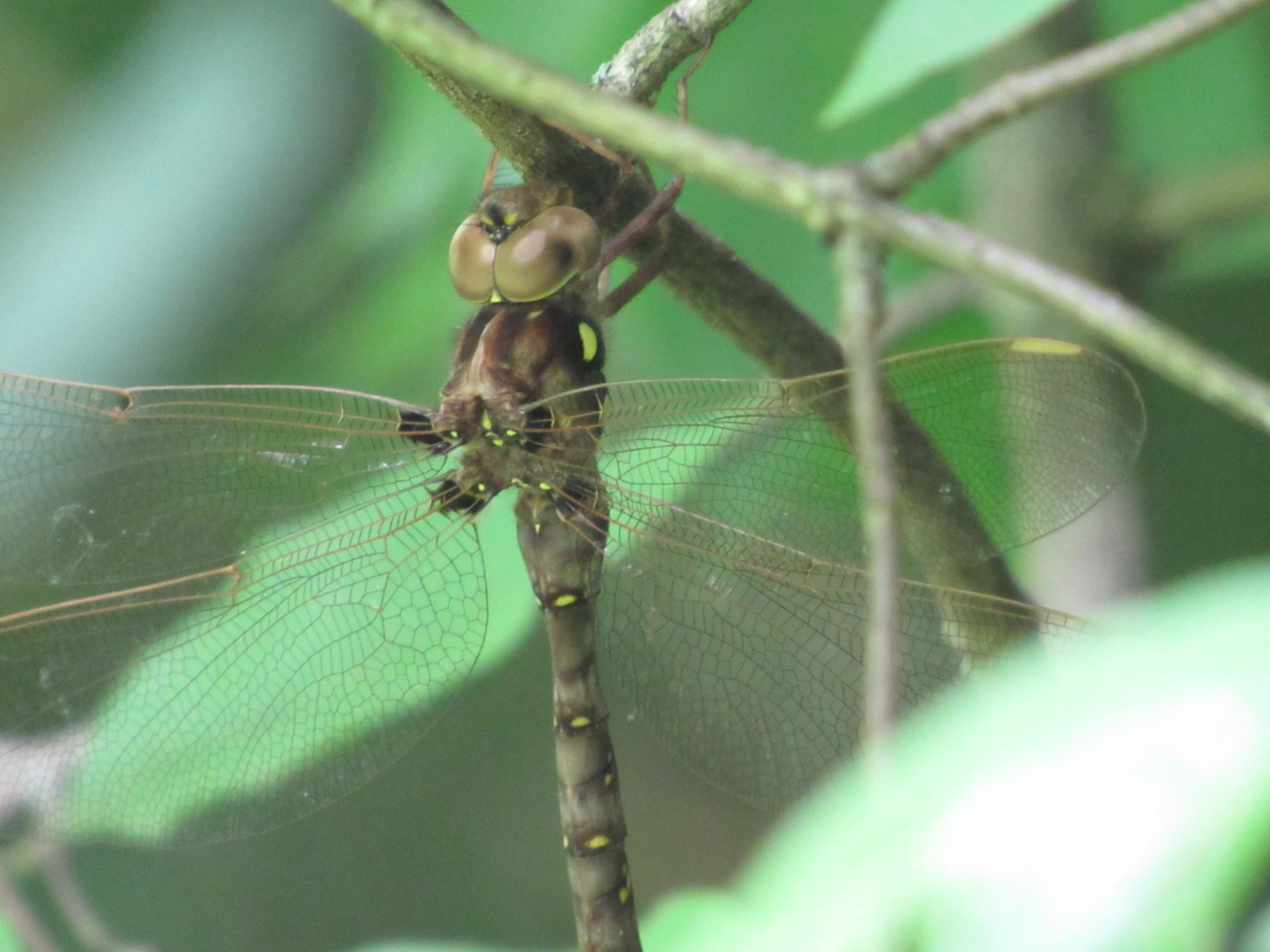
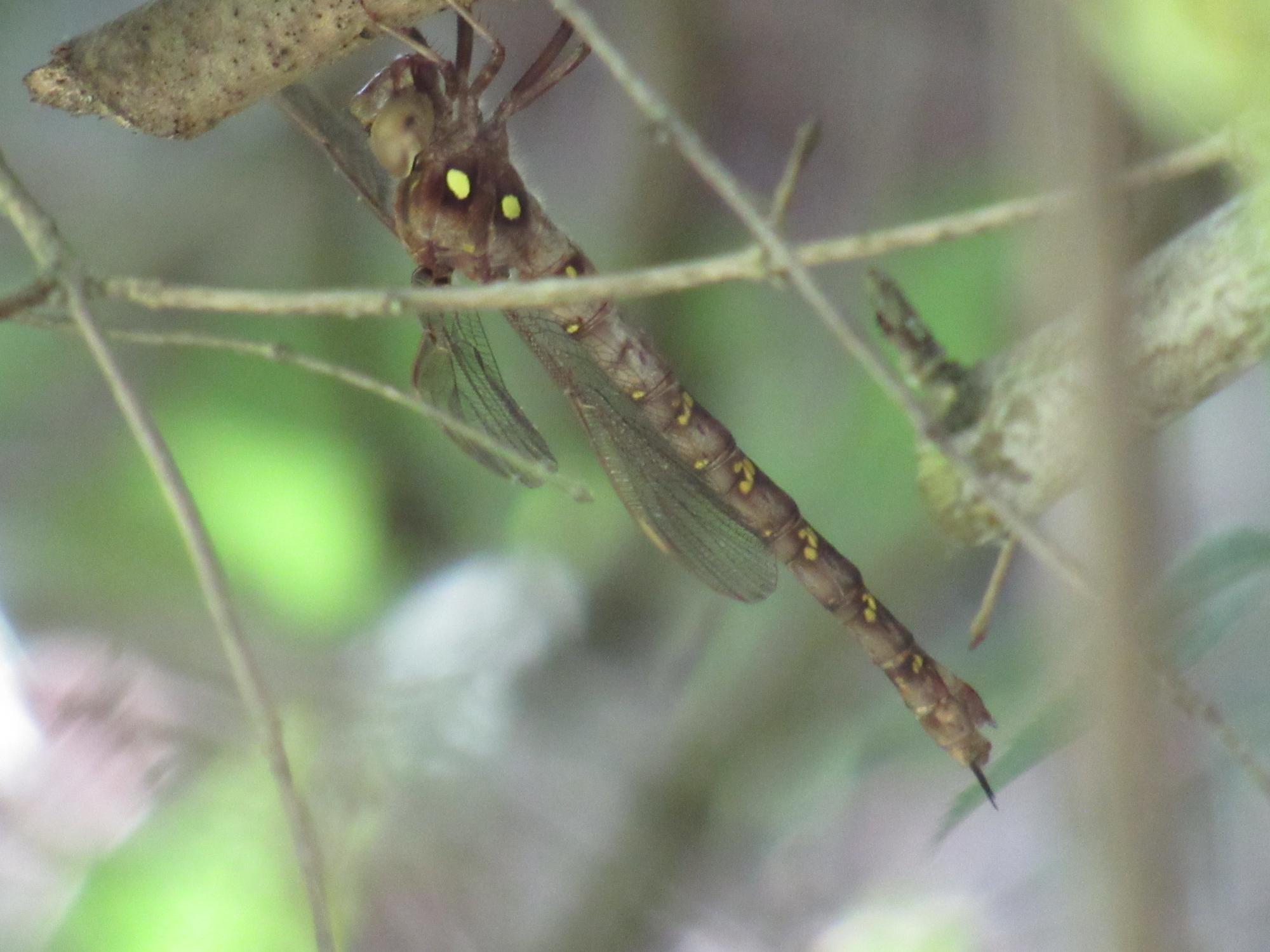
This is a female Fawn Darner perched at Siebenthaler Fen, on July 3, 2020. Fawn Darners have distinctive white spots on the sides of their thorax. (Another species, the Ocellated Darner, has more elongated spots and less brown at the bases of the wings. Ocellated Darners are the rarer of the two species and are not known to occur in southwest Ohio.)

