Herald Moth, HIBISCUS LEAF CATERPILLAR MOTH, DEADWOOD BORER, Common Oak Moth, Figwort Borer, and Black-dotted Drown Moth
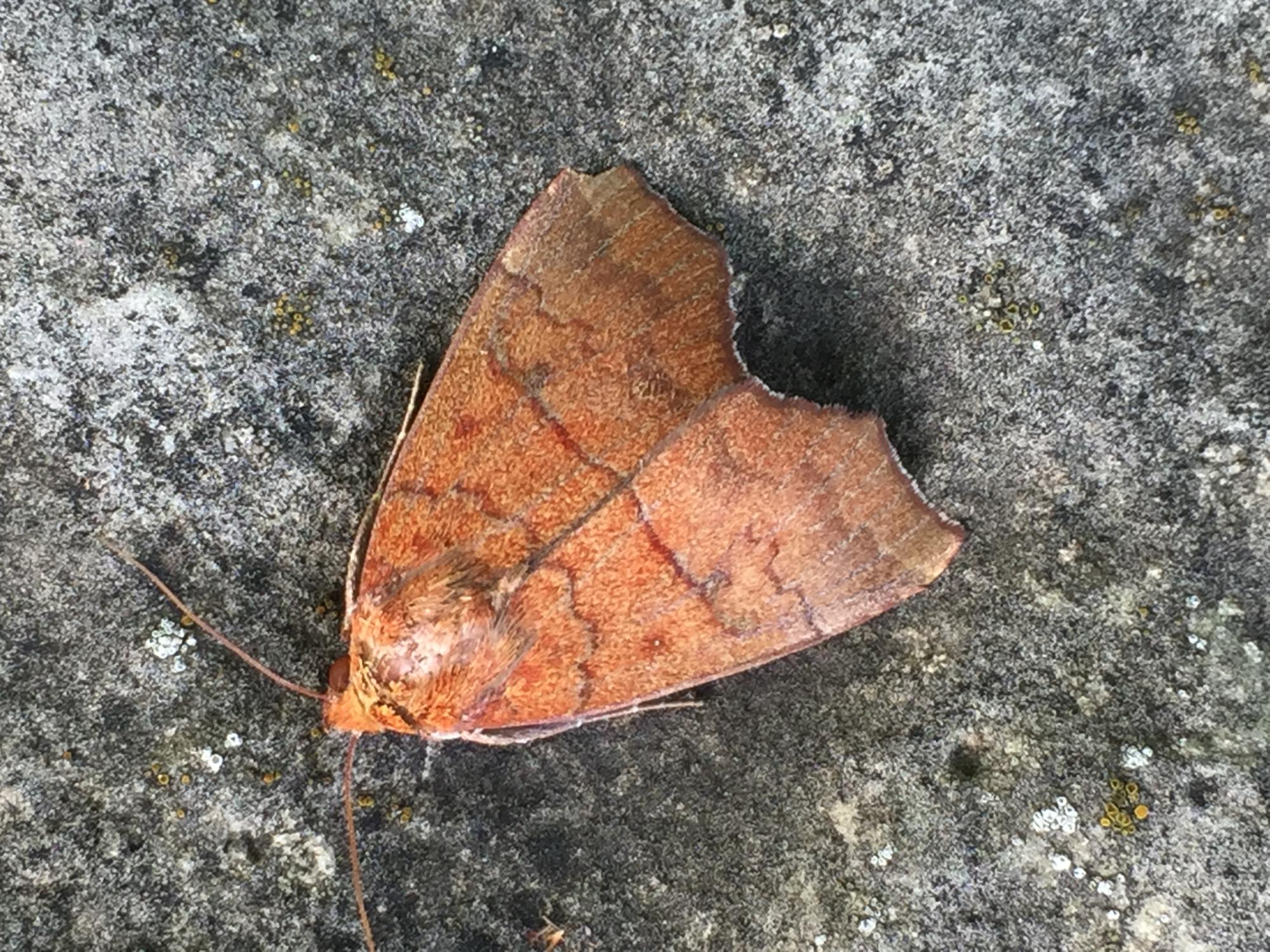
Another Hibiscus Leaf Caterpillar Moth, photographed at Cox Arboretum on September 6, 2018.
Deadwood Borer Moth. As the name indicates, the larvae are found in decaying wood.
Hibiscus Leaf Caterpillar Moth. This species was introduced to North America from Asia.
Deadwood Borer moths come to my lights in the months of June and July.
Common Oak Moth. This is an abundant species in some parts of its range, but I do not see them very often at my home moth lights. They seem to be more common in eastern Ohio.
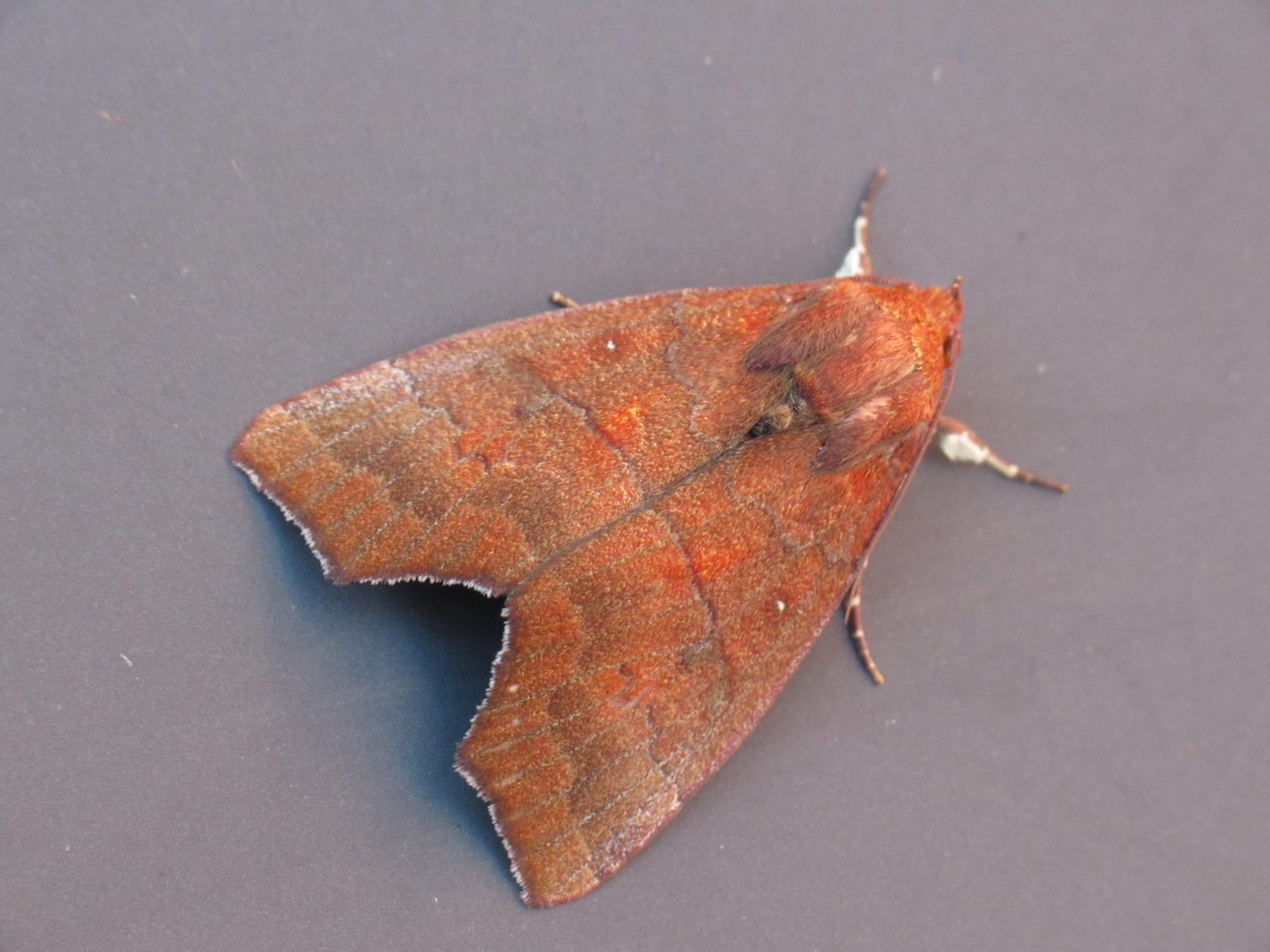
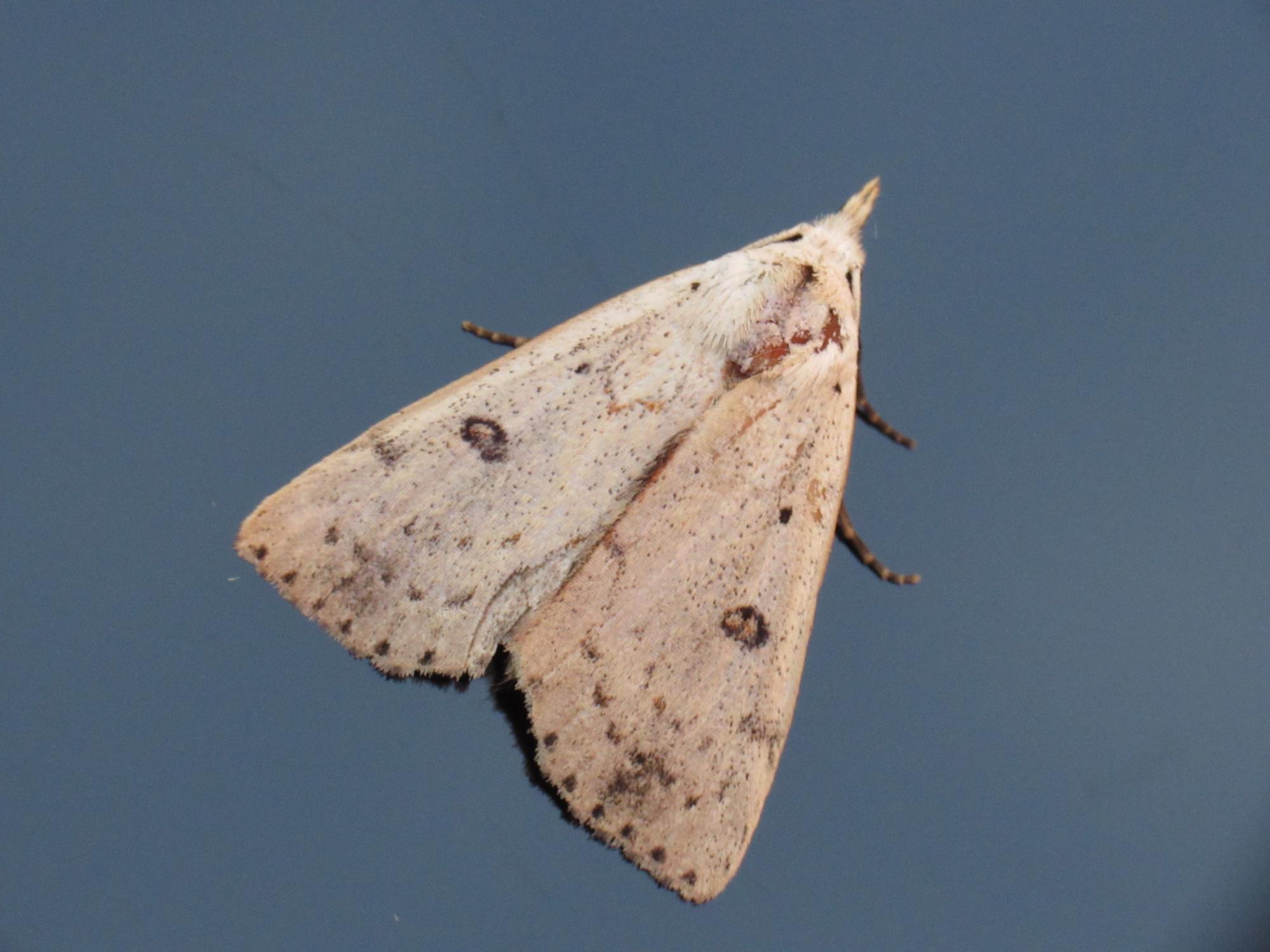
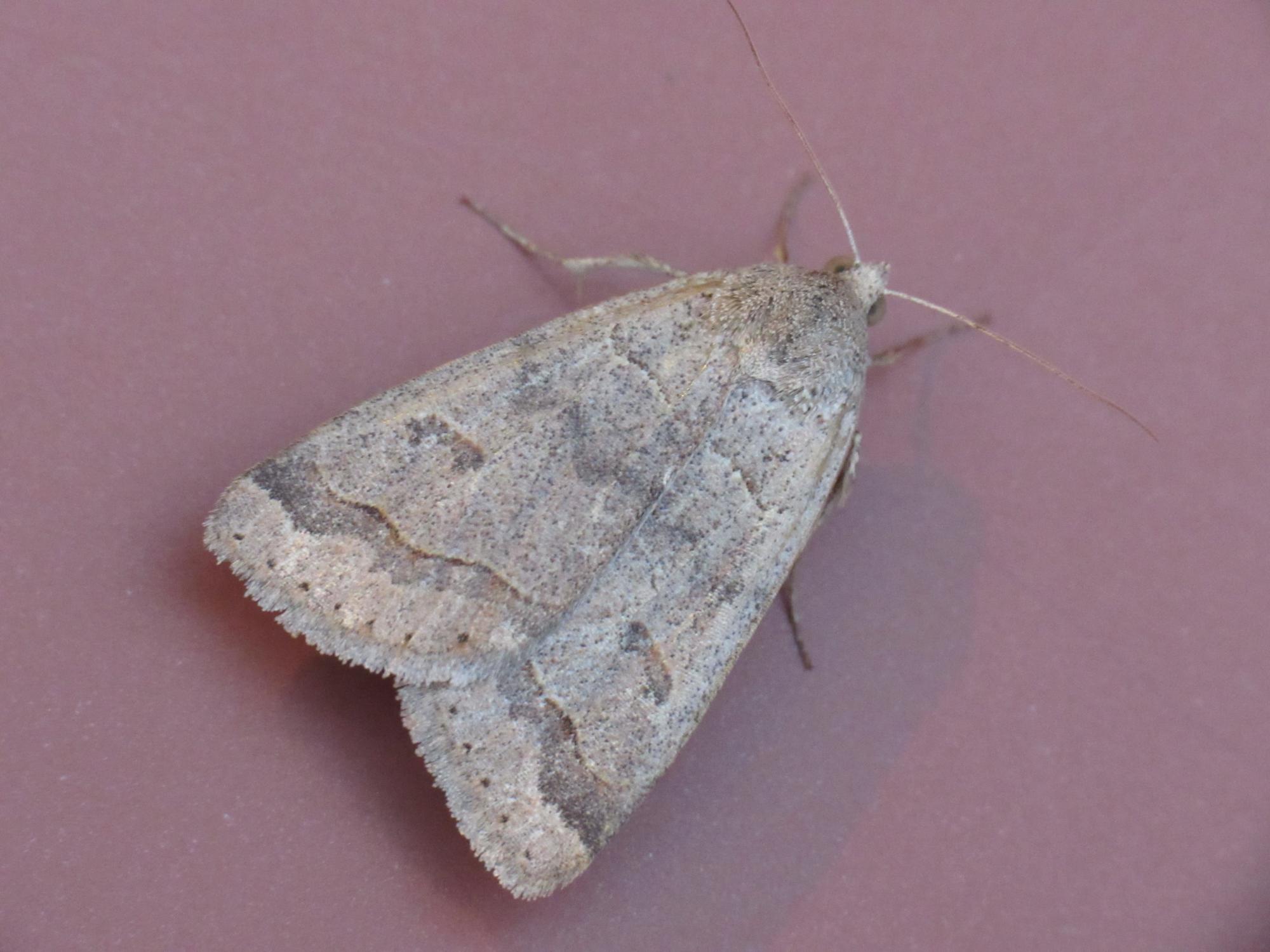
Another Hibiscus Leaf Caterpillar Moth. I have found a couple of these moths at my lights in June, August, and September.
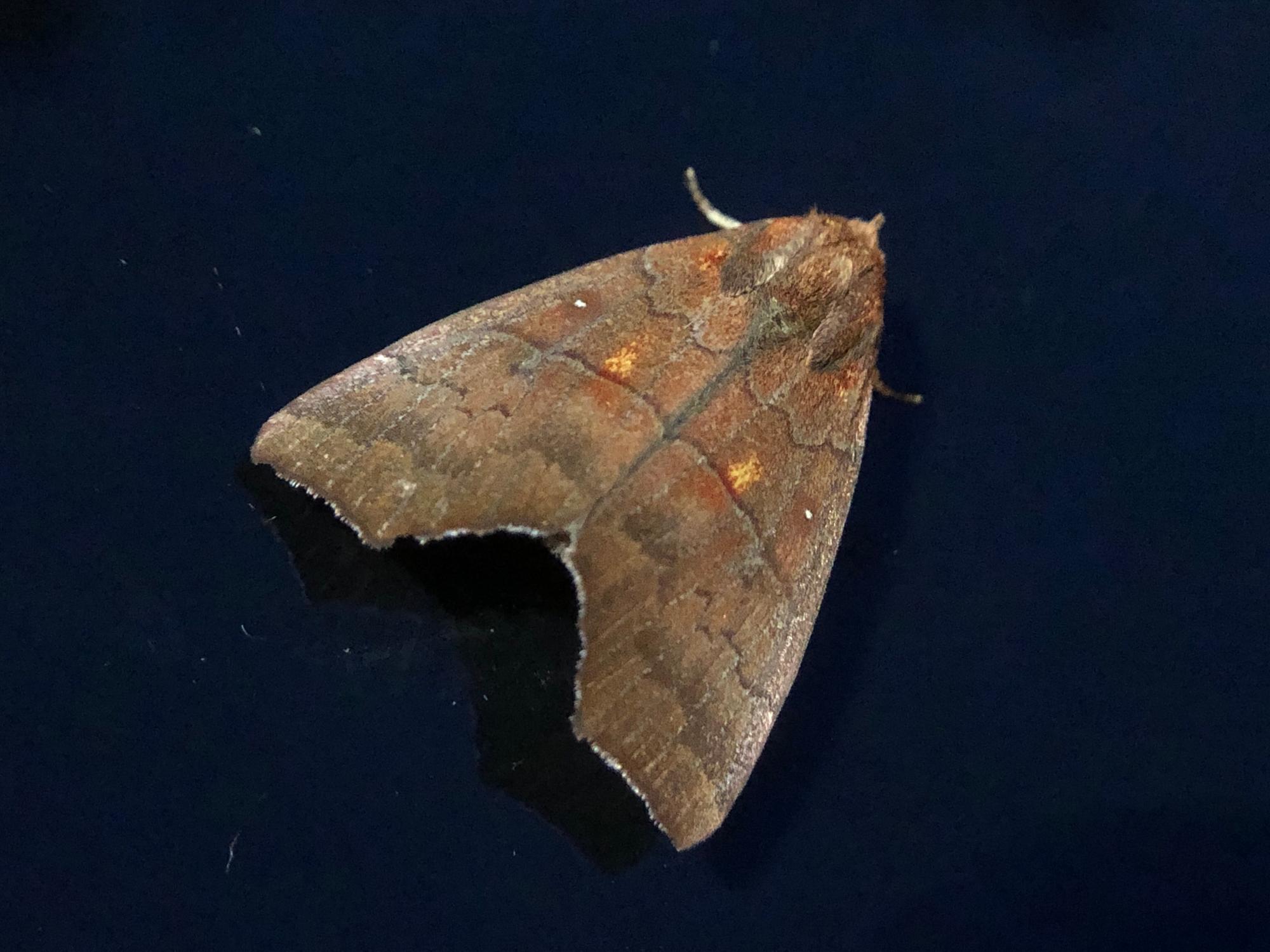
Another Common Oak Moth. This species flies in spring. I have seen them from late March through early May (mostly in the month of April).
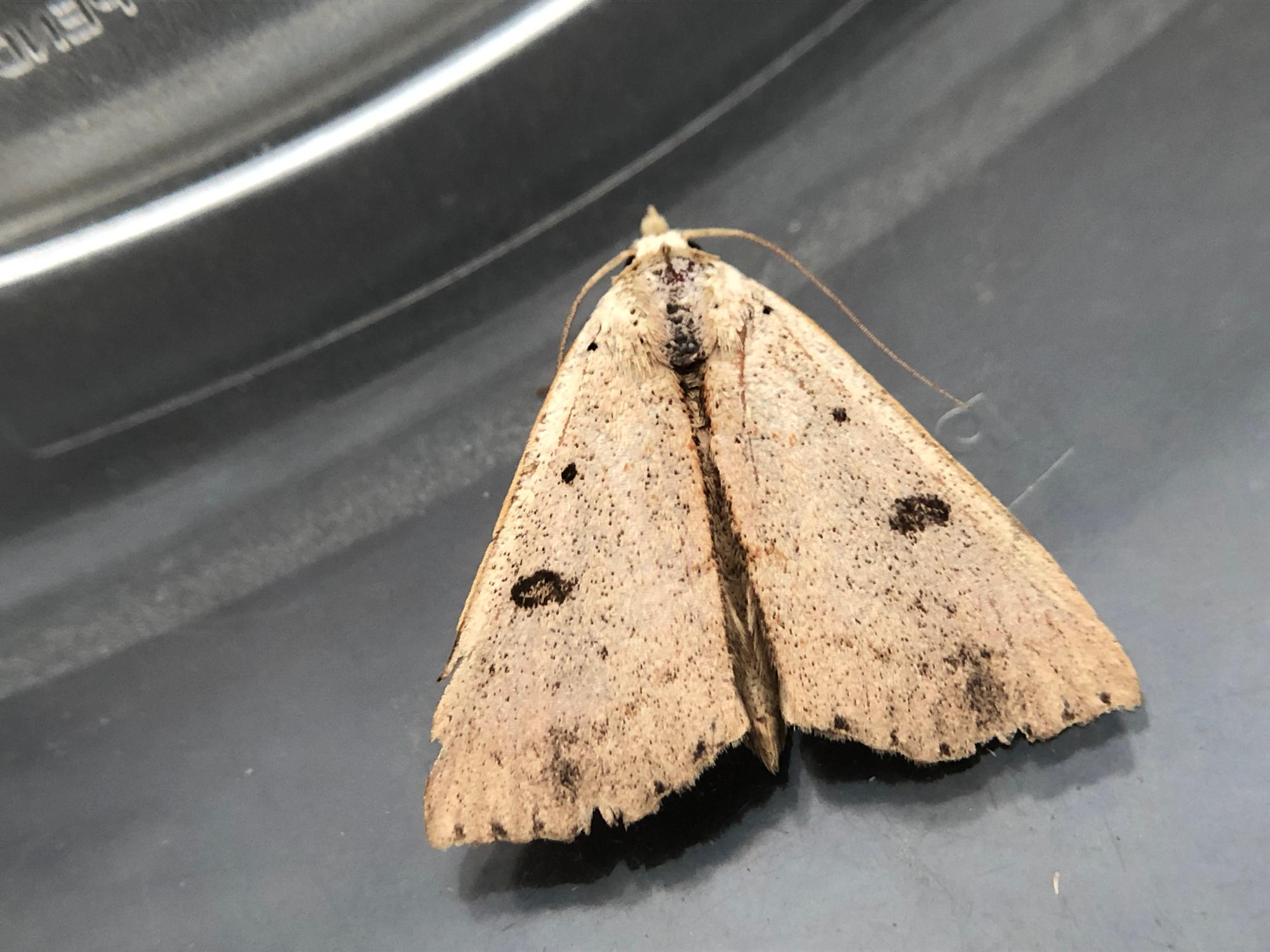
Black-dotted Brown Moth. This is a rather plain-looking moth, but the black spots near the wingtips make it recognizable. This species flies in early spring. I have one early sighting on March 29th, and all of my other sightings are in April.


Figwort Borer Moth (Hydraecia stramentosa). This is a very pretty moth and apparently an uncommon species. It has subtle greenish and pinkish markings. I found this individual at my black lights on August 31, 2025. It is the only one I have found.
The Herald Moth. I love the glowing red streaks! This is the only Herald Moth I have seen. It came to my black lights on June 30, 2025. This species is apparently more common in other parts of Ohio. Adults overwinter in sheltered places such as caves or abandoned buildings. This species is also found in Europe.